
Kinship, Caste and Class
Early Societies in Ancient India
The Ambitious Scholarly Project
One of the most ambitious projects of scholarship began in 1919, under the leadership of a noted Indian Sanskritist, V.S. Sukthankar. A team comprising dozens of scholars initiated the task of preparing a critical edition of the Mahabharata.
V.S. Sukthankar: The Project Leader
Leading Indian Sanskritist
Vishnu Sitaram Sukthankar was a renowned Indian Sanskritist who led this monumental project. His vision was to create a definitive version of the Mahabharata by systematically comparing manuscripts from across the Indian subcontinent.
The Critical Edition Process
What exactly did this involve? The process was methodical and comprehensive, requiring careful analysis of manuscripts from across the subcontinent.
Manuscript Collection
Collecting Sanskrit manuscripts written in various scripts from different parts of the country
Comparative Analysis
Working out methods to compare verses from each manuscript systematically
Common Elements
Selecting verses that appeared common to most versions for the main text
Documentation
Recording regional variations in detailed footnotes and appendices
Manuscript Sources Across India
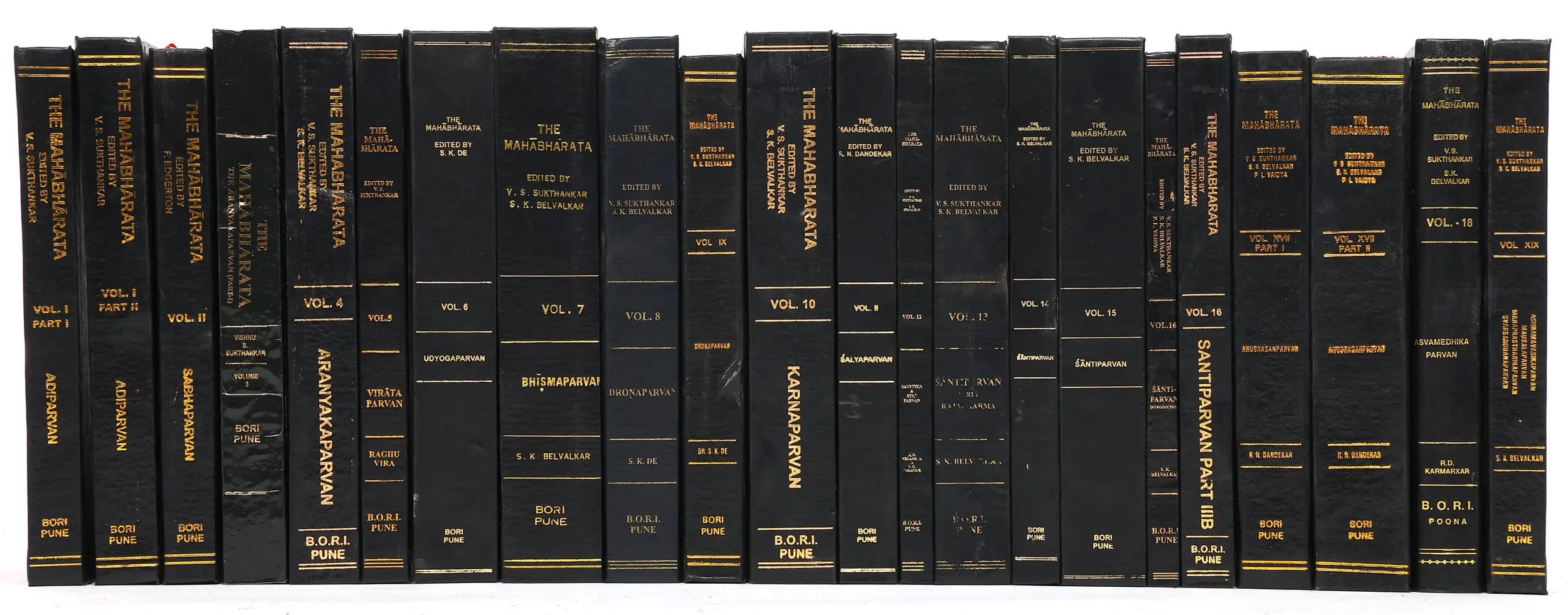
Ancient Sanskrit Manuscript
Traditional palm leaf manuscript showing the intricate Devanagari script used in northern regions
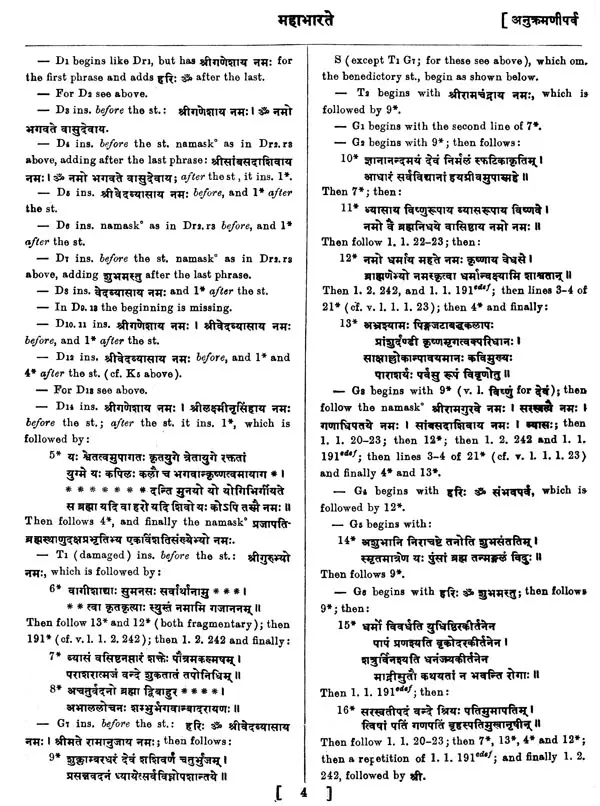
Regional Script Variation
Manuscript showing regional script variations that scholars had to decipher and compare
Initially, it meant collecting Sanskrit manuscripts of the text, written in a variety of scripts, from different parts of the country. The geographical spread was remarkable – from Kashmir and Nepal in the north to Kerala and Tamil Nadu in the south.
Key Findings of the Project
🌏 Common Elements
Several common elements in Sanskrit versions were evident in manuscripts found all over the subcontinent, showing a shared textual tradition.
🎭 Regional Variations
Enormous regional variations in text transmission over centuries, reflecting local cultural influences and interpretations.
📊 Documentation Scale
More than half of the 13,000 pages were devoted to documenting these variations in footnotes and appendices.
Impact on Historical Understanding
Our understanding of these processes is derived primarily from texts written in Sanskrit by and for Brahmanas. The critical edition project revealed important insights about how we should approach these sources.
| Period | Approach to Texts | Understanding |
|---|---|---|
| 19th-20th Century (Early) | Took Sanskrit texts at face value | Believed everything prescribed was actually practiced |
| Later Scholarship | Studied other traditions (Pali, Prakrit, Tamil) | Found that normative texts were authoritative but also questioned |
| Modern Understanding | Critical analysis of multiple sources | Recognized that ideas were sometimes rejected or modified |
🤔 Critical Thinking Questions
Key Takeaways for Historical Study
🔍 Critical Analysis
Always examine who wrote a text, for whom, and in what context rather than accepting it at face value.
🌐 Multiple Perspectives
Study texts from different traditions and languages to get a complete picture of social practices.
⚖️ Theory vs Practice
Distinguish between normative prescriptions and actual social practices in historical sources.
🗺️ Regional Diversity
Recognize that ancient India was diverse, with local variations in how traditions were understood and practiced.